IT load explored
3D
Operating conditions simulated across the full load window of the reference data hall.

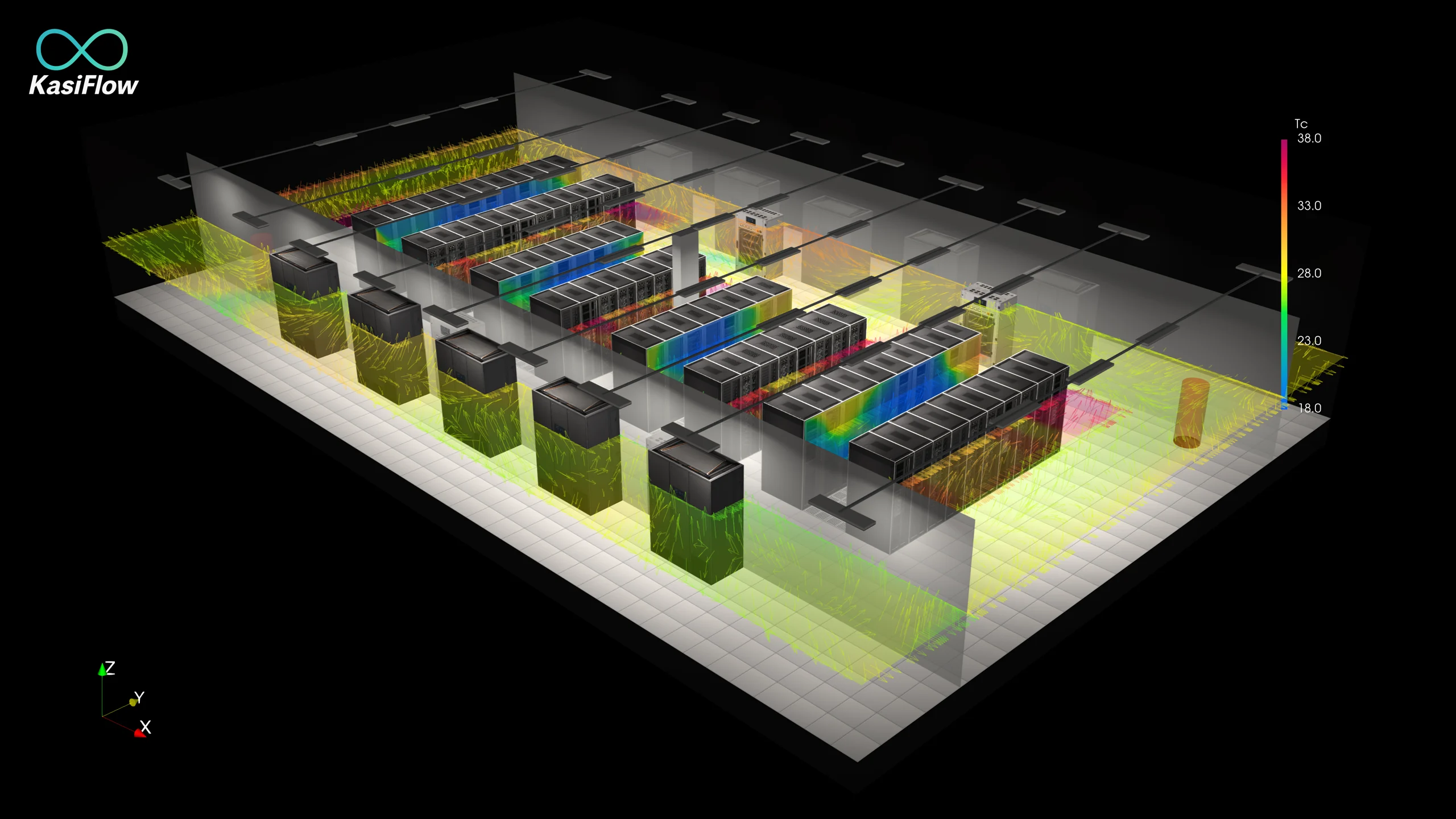
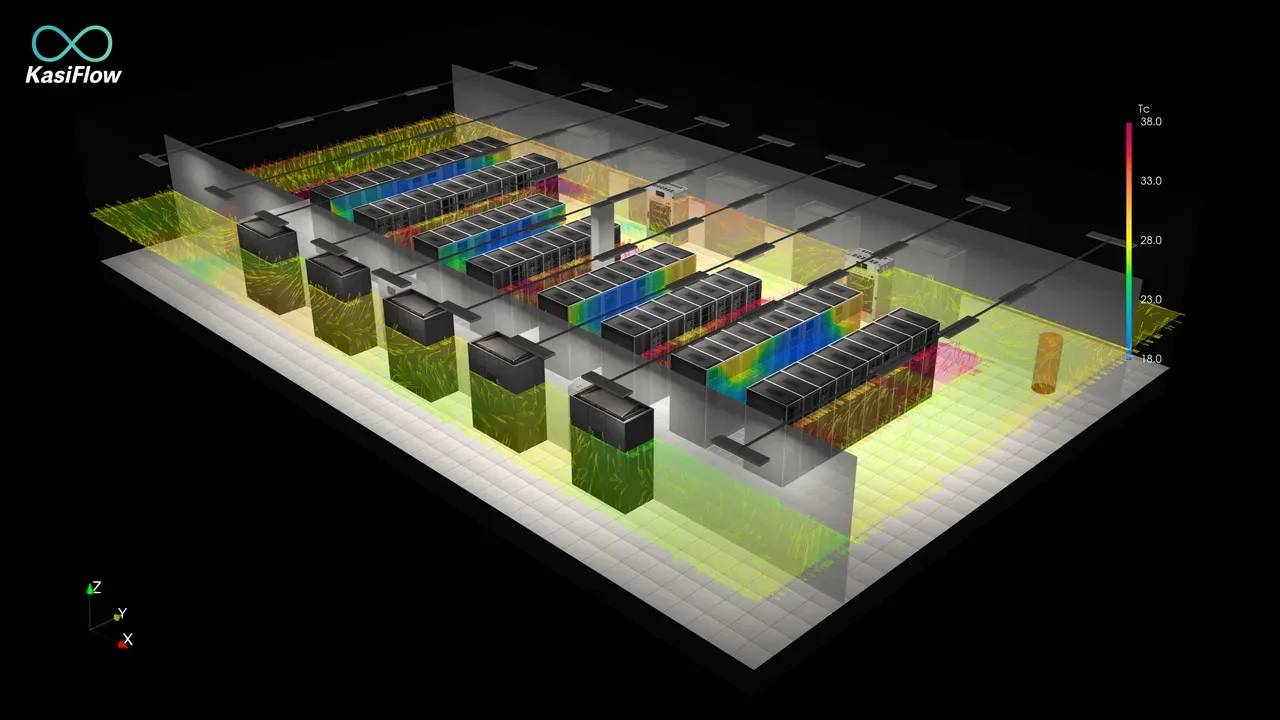
CFD simulation, a 3D digital twin and asset intelligence, fused into one operational asset — see how air moves, where heat builds and how much headroom you really have, before problems happen.
We build a physics-accurate replica of your facility — airflow, heat, equipment and energy. Test failures, find hotspots, free stranded capacity and prove savings, reducing the risks in the live operation. Complex engineering in, simple decisions out.
IT load explored
3D
Operating conditions simulated across the full load window of the reference data hall.
Racks, individually
13
Every rack gets its own inlet temperature, airflow and thermal grade — no averages hiding risk.
Risk to operations
0
Failures, expansions and setpoints are tested in the twin — never on your production floor.
Scroll to walk. Every surface is colored by simulated temperature — the same physics your operators will rely on.
CFD shows the air you cannot see — flow, pressure and recirculation, rack by rack.
Containment, hotspots and the racks drifting toward their limits — found before they fail.
Thermal indices computed from the simulation — the grammar auditors and SLAs understand.
The same twin that lets you walk the floor answers the questions that matter: is this condition safe, efficient — and for how long?
Twin Deck is the thermal operations center of DCIS: orbit the site or walk the aisles, with the operations panel, alarms and every published scenario one click away.
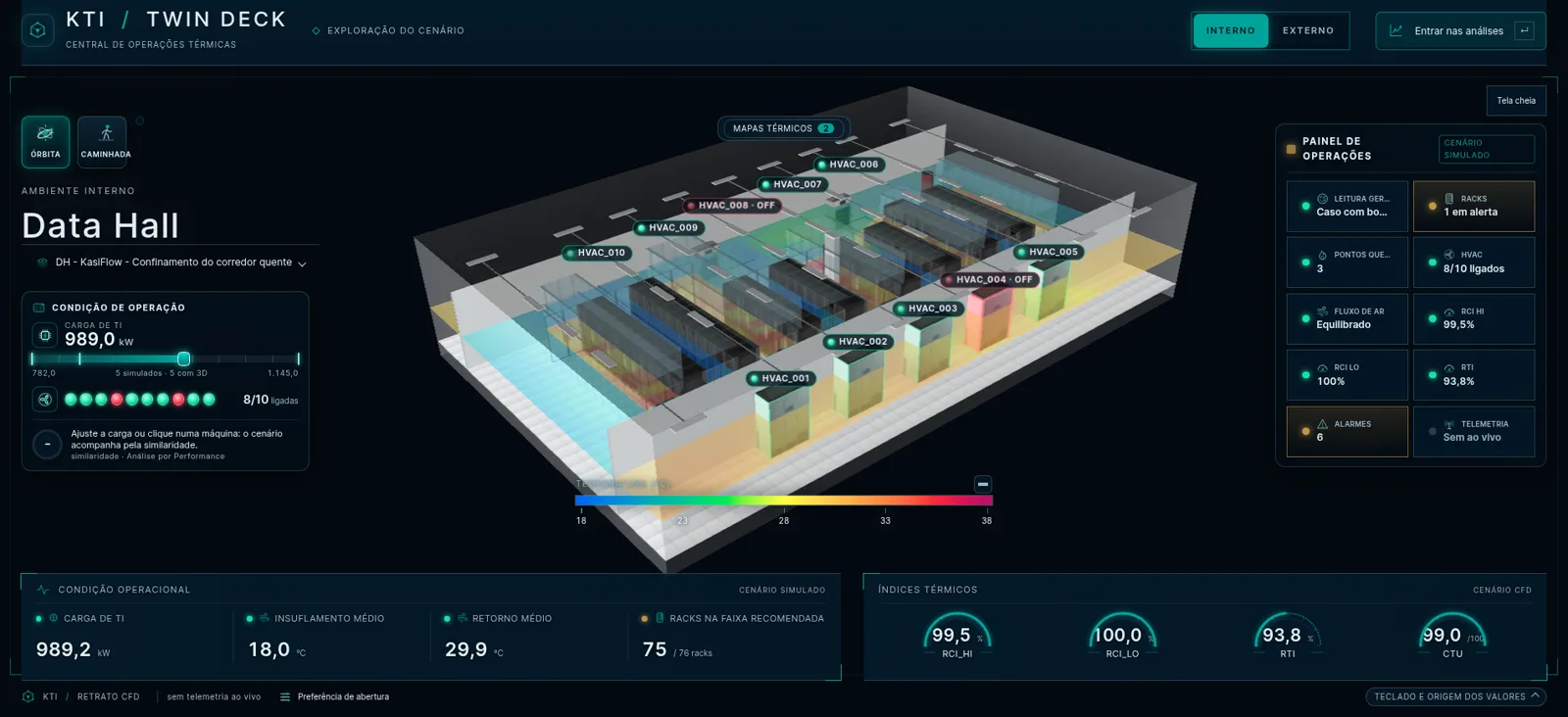
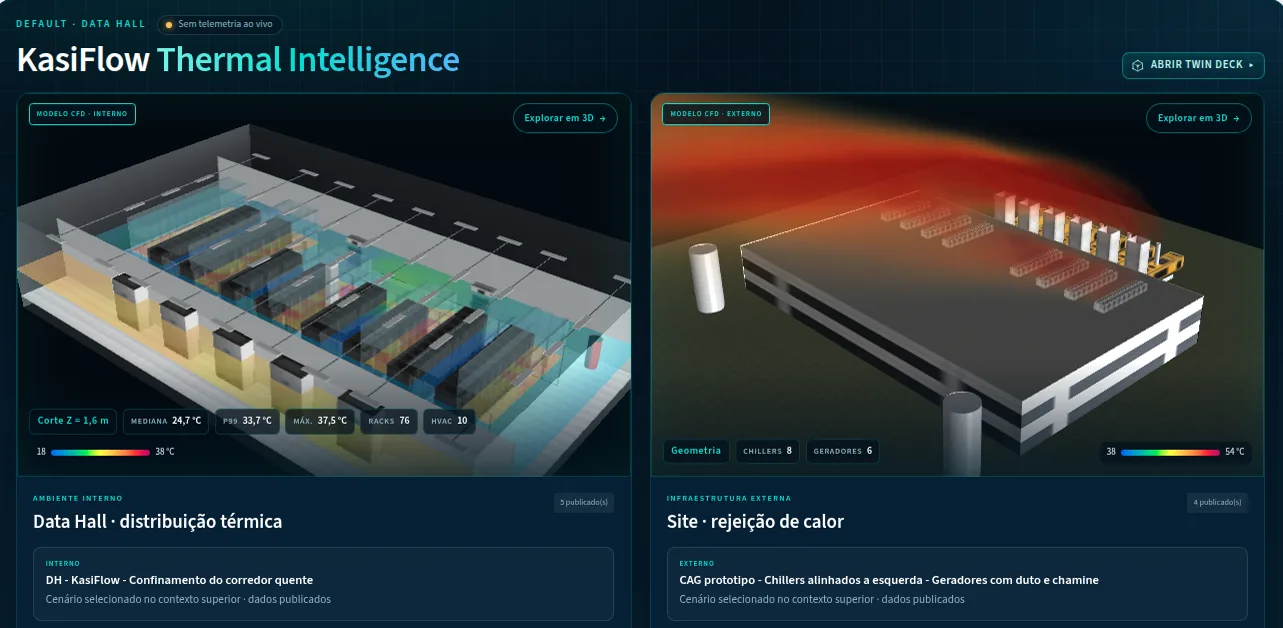
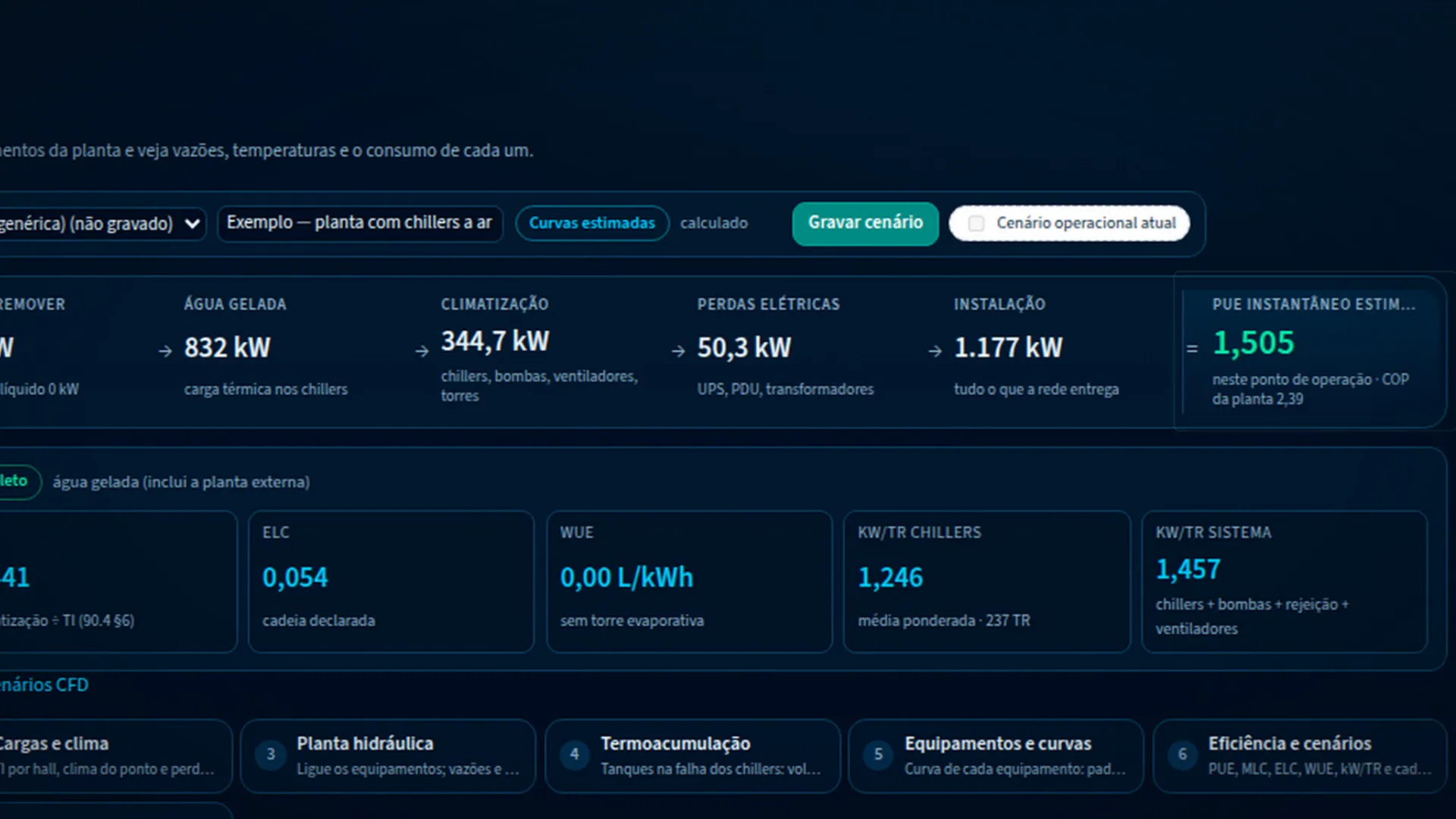
From IT load to chillers, pumps, fans and electrical losses: DCIS decomposes the site's energy at any operating point and scores it against ASHRAE 90.4 limits and your own CFD scenarios.
Values from the published demonstration scenario — DCIS labels simulated, estimated and measured data on screen, and says what is still missing. Nothing is silently turned into a zero.
DCIS simulates the outside too: chillers, generators, stacks and wind. See the thermal plume, quantify recirculation into your intakes, and protect continuity on the worst day of the year — not the average one.
Anticipate risk. Protect continuity.
What you fix in one module holds in all of them: one registry, one scenario, one geometry — from the CFD mesh to the executive report.
Like fire suppression or redundant power, DCIS becomes part of the facility itself: living evidence of thermal safety and efficiency that your colocation customers can see, question and audit.
Tell us about your site — we reply with a scoped proposal: what the twin covers, which studies come first, and what your operation gets on day one.